2birds·The Brand
Our story

Dream big. Aim far.


2birds exists for one reason. People who want more from their lives should be able to learn their way there.

Twenty-five questions · find how you learn ↓
§ I · Why we exist

Every course begins with someone who wants more.

A nurse who wants to lead her ward. A cook who dreams of running his own kitchen. A forty-year-old starting over after retrenchment, sitting in a classroom for the first time in twenty years and hoping the material will make sense. These are the people at the end of everything we develop.

They rarely see us. We are the firm behind the training academy, the ones who design the course, develop the lesson plans, build the assessments and guide the paperwork through the Skills and Workforce Development Agency (SWDA). But we never forget who the work is really for. A course is not a stack of documents. It is a bridge between the life someone has and the life they want.

So we hold ourselves to a simple promise. Dream as big as you like, and our job is to build the course that can actually take you there. A course should lift people up, never screen them out, and the height a learner reaches should be set by their own effort, never by carelessly made material.

A stack of well-read books

It is never too late to aim far. Some of the best learners we have ever served started later than everyone else in the room.

§ II · The name

Why 2birds?

Nobody reaches the sky alone.

Watch birds on a long flight and you will notice they rarely travel solo. They fly in pairs and formations, and science tells us why. A bird flying behind another rides the lift of the one in front, saving energy on every beat of its wings. Two birds see more danger than one. Two birds arrive in better condition than one. The pair is not sentimental. It is how the crossing is completed.

That is the working relationship we offer. You bring the dream, a new academy, a new course, a business that teaches what you know. We fly in front, taking the hardest air, the regulations, the paperwork, the audits, so you arrive with strength to spare. And we stay in formation until the work is safely down. We do not leave early.

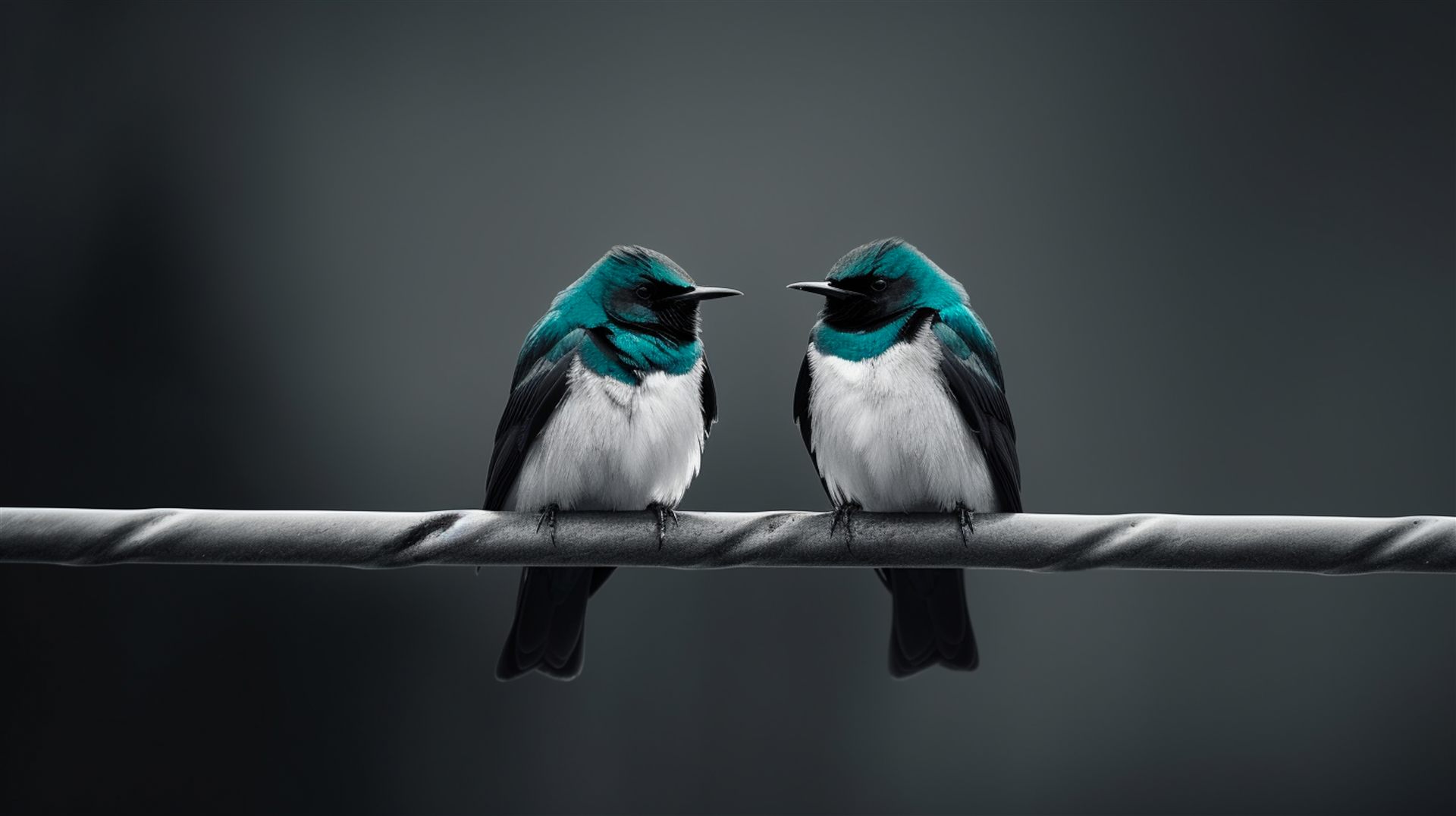
Two birds side by side on a wire
The 2 in 2birds is deliberate. Two sets of eyes on every page, two parties in every promise.
§ III · What the pair means in practice

2birds DNA.

We fly in front

In nature

The bird in front meets the hardest air, and the pair trades the lead in turns so neither is worn down.

In our work

We take the front of the regulatory headwind, the forms, the frameworks, the follow-up queries, so your team can spend its energy on teaching.

We keep watch

In nature

Two birds watch in turns. While one feeds, the other watches the horizon, so nothing arrives unseen.

In our work

Two sets of eyes read every page before it leaves the firm. What one of us might miss, the other catches, well before any auditor does.

We stay together

In nature

Many species pair for life, navigating and returning together. The bond is how they survive the long crossings.

In our work

We stay through the approval, through the first class, through the audit that comes years later. Clients who joined us for one course tend to still be with us at the tenth.

Curious how you learn? Take the twenty-five questions ↓

Aim for the skies, and one day you look down from them. The sky belongs to whoever learns to reach it, not only to those who could afford the view.
From the founder, Keith Ho
§ IV · How we keep ourselves honest

Small, senior, and answerable.

Big promises are easy to make on a website. These are the three working rules that make ours real, kept on every project without exception.

I

Two readers on every page

No document leaves the firm on one person's judgement alone. Every course, submission and audit response is read twice before anyone outside the firm sees it.

II

The people you meet do the work

We do not subcontract. The practitioners you meet at the first conversation are the ones whose names sit against the finished work.

III

Honesty before comfort

If a course should not be built, or a project is not ours to take, we say so at the first conversation. Where we can, we point you to someone better placed.

A seminar room ready for its class
§ V · How we teach

No one way of teaching fits everyone.

People take in new material differently. Some understand a diagram at a glance. Some need to talk an idea through. Some want the manual, and some just want to try it with their own hands. A course built for only one kind of learner quietly leaves the others behind.

We design against that, deliberately. The VARK model, published by the educator Neil Fleming in 1987, describes four learning preferences, Visual, Aural, Read/write and Kinaesthetic. In plain terms, that means seeing, hearing, reading and doing, and most people use a mix.

So every course we build offers more than one route to the same understanding. A learner can meet the material in the way that suits them, and a trainer never has to teach to the middle and hope the rest keep up.

Try it yourself

How do you learn?

It takes twenty-five quick questions, and there are no right answers. At the end you will see your own learning style, and how we would design a course around it.